2022
Automating native ads
The Team
The Advertiser Business Products (ABP) team, work for advertisers on all Meta platforms globally, to create the best user experience for both advertisers and users.
My Role
As a Product Designer, I worked in a focussed team of 25 Engineers, a Project Manager, and a UX Designer. I co-worked with another designer to develop and realise the project.
Understand
The Context
Advertising is currently delivered in a ‘blanket style’ fashion, with one image or video being uploaded to the Ads Manager platform, along with a title and description. These assets are then compiled and delivered across all Meta platforms as Ads (E.g. Facebook Feed, Marketplace, Instagram Feed, Stories, Reels, etc.
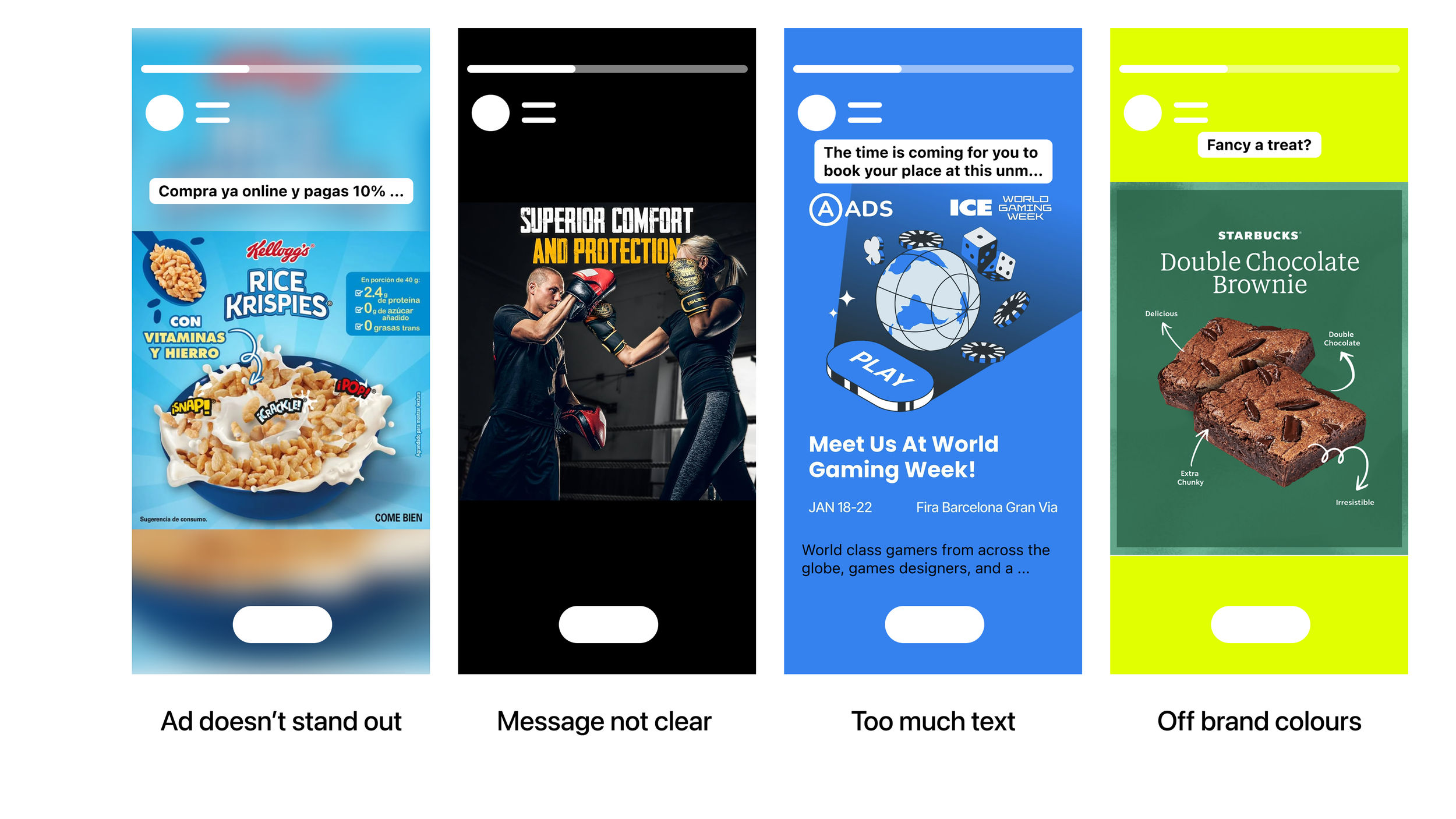
The delivery of these assets on portrait formats such as Instagram Stories, use default design settings which do not work.
The Insights
Ad Targeting
Advertisers know that certain demographic groups will favour different text and animation styles.
User Segmentation
Meta can segment users by demographics: Age, Gender, Location, Interests etc.
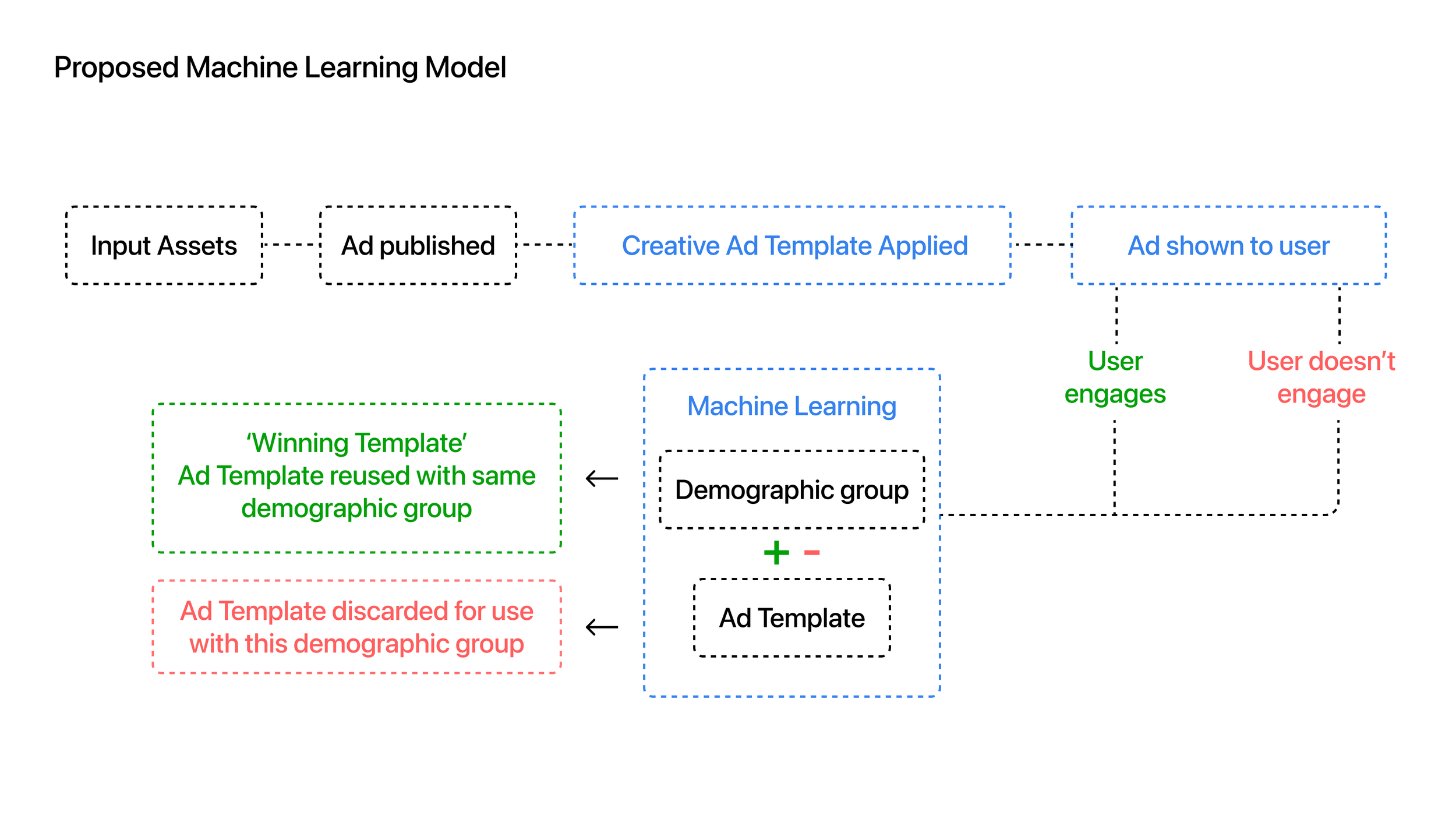
Machine Learning
Meta can recognise demographic groups that resonate with specific ads and direct similar ads
Key decision #1Utilise machine learning in the Ad targeting process
Why?
Through the use of machine learning, human creativity can be complemented by the intelligent targeting of ads to the corresponding favourable demographics.
The Hypothesis
By applying a series of design guidelines and animation styles to non-native portrait ad transformations, then using machine learning, directing them to favourable demographic groups, CTR engagement can be increased by 3-8%.
Develop
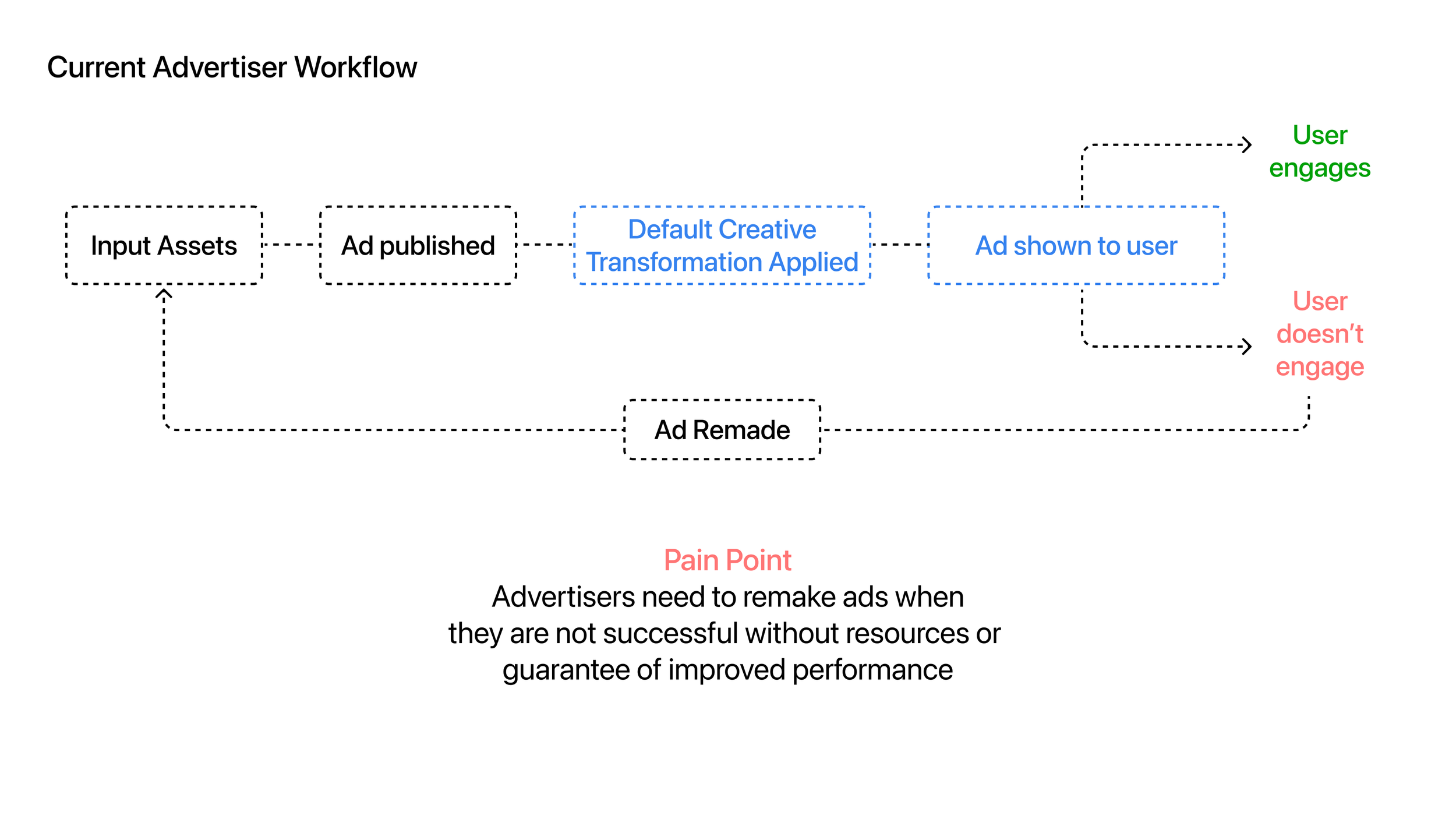
Advertiser Workflow
Advertisers want to increase the effectiveness of their ads with minimal effort. Because Ads are not tailored to the variety of placement formats in which they are being delivered on, Advertisers need to manually remake ads when they are not successful without resources or guarantee of improved performance.
Key decision #2Create a wide range of creative transformations
Why?
Through a variety of diverse template design styles, a broader audience can be reached, thus allowing the machine learning system to detect certain ‘winning templates’.
The Challenge
Create a set of ‘winning templates’ that apply creative transformations (design styling and animation) to non-portrait images that can be used across an array of different demographic groups.
Develop
Test Phase
Designs were built by engineers using design specifications provided by the designer.
Key decision #3Test templates incrementally in batches with 1% of Instagram’s user base
Why?
Through working in a testing environment using batches of designs (3-4 designs at a time) the team can learn progressively which design features are most effective.
Actual CTR values have been adapted for confidentiality purposes.
Design Learnings
Image must be displayed before 0.5s otherwise engagement decreases
Image less than 85% width of the screen begins to decrease engagement
Showing more or less text doesn’t have a big effect on engagement
Text reveal by letter can have a positive impact
Design Learnings
Dark backgrounds has positive impact, especially black
Some design elements can increase engagement such as subtle shapes
Title shown below image negative impact
Design Learnings
Subtle animations with minimal text are effective
Using large shapes distract user and detract engagement
Using bold colours also detracts user attention
Reflect
Conclusion
It is clear to see from the 5 ‘Winning templates’ that were created that it is possible to increase CTR engagement of IG Story ads by 3-8%, using creative transformations. Key learnings:
Coherence with content
The more variety in ad templates meant more coherence probability between the template design and the content within it.
Diverse Variety
To tackle this issue, there is a necessity for a diverse variety of designed templates.
Advert Immunity
It became evident that after periods of time, users began to become ‘immune’ to certain template styles, which caused a drop in their CTR performance.
Thanks for reading!